
Nella’s Devotion After Betrayal
The Lying Life of AdultsNella moves from quiet partnership into grief after Andrea’s departure, while her enduring attachment to him both sustains her and narrows her life.
increasing Bearing strength in each event
 decreasing
Bearing strength in each eventdecreasingA Carefully Ordered Home

A Carefully Ordered Home
Work and family life
Nella teaches Latin and Greek, corrects romance novels, and raises Giovanna in a household organized around education, work, and controlled conversation. She is affectionate with her daughter, though less playful than Andrea, and often tries to smooth difficulties before they become open disputes.
The quiet mediator
When Andrea speaks harshly about Vittoria, Nella tends to answer in measured phrases rather than challenge him directly. She understands that the family history is painful but gives Giovanna only partial explanations, hoping that restraint will spare her daughter from adult conflict.
That habit of mediation brings warmth to the household, but it also leaves important matters unsaid. Nella’s calm is not the same as ignorance: her later response to betrayal reveals how much feeling she has kept beneath the ordinary routines.
Witness to an Ambiguous Moment
Witness to an Ambiguous Moment
A detail that cannot be dismissed
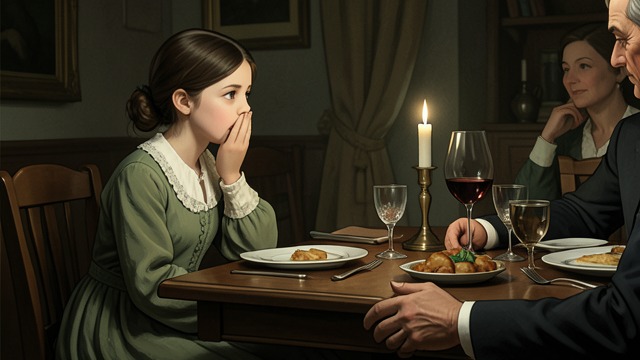
Giovanna sees Mariano hold Nella’s ankle beneath the dinner table. Nella later pulls her leg away, but Giovanna cannot determine what the contact means or how long it has lasted. The scene turns her mother’s previously unquestioned availability into something that may belong partly to another person.
A daughter’s divided response
Giovanna feels jealousy, shame, and fear that telling Vittoria would expose Nella to contempt. She keeps silent, even though Vittoria has urged her to look closely at her parents. The secrecy becomes one more burden of growing up: she must decide what to report and what to protect without knowing the facts.
The moment matters less as proof of an affair than as the beginning of Giovanna’s suspicion that adults’ behavior exceeds the clear explanations they give children. Nella remains, in her daughter’s eyes, both beloved mother and an increasingly unknowable person.
The Revelation of Andrea’s Other Love
The Revelation of Andrea’s Other Love
A family secret named aloud
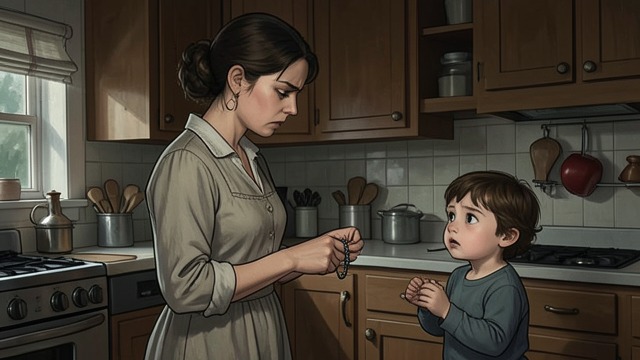
When Giovanna asks about the bracelet and Costanza, Nella abruptly tells her that Andrea has had another wife for fifteen years. The revelation bursts out during a tense meal, turning a child’s question about an object into an acknowledgment of a long-hidden adult relationship.
An attempt to name the damage
Giovanna answers that Nella, too, has another husband, reflecting how uncertain she has become about the adults’ attachments. Nella denies it desperately. Her denial does not explain every troubling encounter Giovanna has witnessed, but it makes clear that she understands the accusation as a threat to the meaning of her marriage.
The disclosure ends the family’s pretense that Andrea’s departure is a temporary disturbance. It also leaves Giovanna trying to hold together competing versions of loyalty, betrayal, and responsibility while Nella and Andrea have not yet formally separated.
The Long Aftermath
The Long Aftermath
Living beside an absence
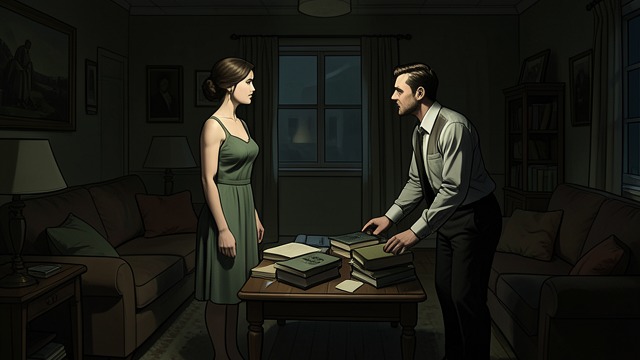
Andrea and Nella take almost two years to make their separation legal, but their shared home is already marked by long absences, conflict, and disputes over possessions. Nella insists that Andrea cannot remove his books and papers; their arguments show how practical objects become the remaining territory of a broken marriage.
Suffering as daily routine
Nella becomes thinner and increasingly depressed, while continuing to work and look after Giovanna. She preserves some of Andrea’s belongings and remains alert to his calls and visits, even as she blames him for abandoning them. Her grief does not follow a clean progression from love to hatred.
Giovanna, who wants her mother to reject Andrea, is angered by Nella’s continued attention to him. Yet she gradually recognizes that her mother’s attachment cannot simply be commanded away. Nella’s persistence becomes both a sign of emotional endurance and a constraint that shapes the life she can imagine without Andrea.
Love Remembered, Not Repaired
Love Remembered, Not Repaired
A marriage viewed from its remains
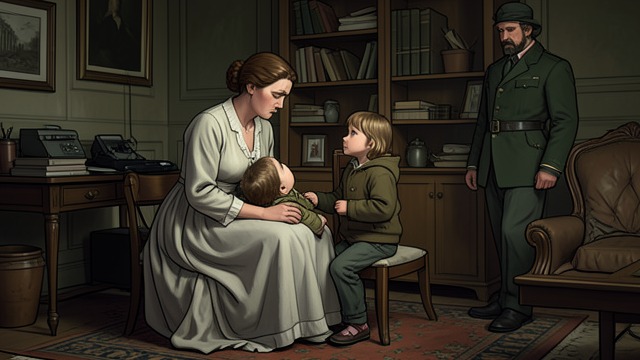
Nella tells Giovanna that she sometimes forgets she hates Andrea when she remembers the years when they were happy. The phrase gives Giovanna a new way to understand her mother’s continued attachment: love and anger can coexist without the injured person being foolish or unaware.
The cost of fidelity
Nella continues to help Andrea with documents and administrative tasks, even though he has moved in with Costanza. Her kindness unsettles Giovanna, who sees how Andrea can receive care from the woman he has hurt while continuing his own life elsewhere.
Nella’s story does not resolve in reconciliation or independence. Rather, her capacity to remember happiness sustains a bond that remains painful and unequal. Through her, Giovanna sees that adult attachment can persist without making the history that damaged it disappear.
Before Giovanna’s adolescence, in the years before the marriage crisis
When Giovanna is about thirteen, during dinner at Costanza’s home
At thirteen, during a Sunday lunch after the bracelet’s return
During the two years before Andrea and Nella formally separate
Near the end of Giovanna’s account, after she begins to reconsider her parents
